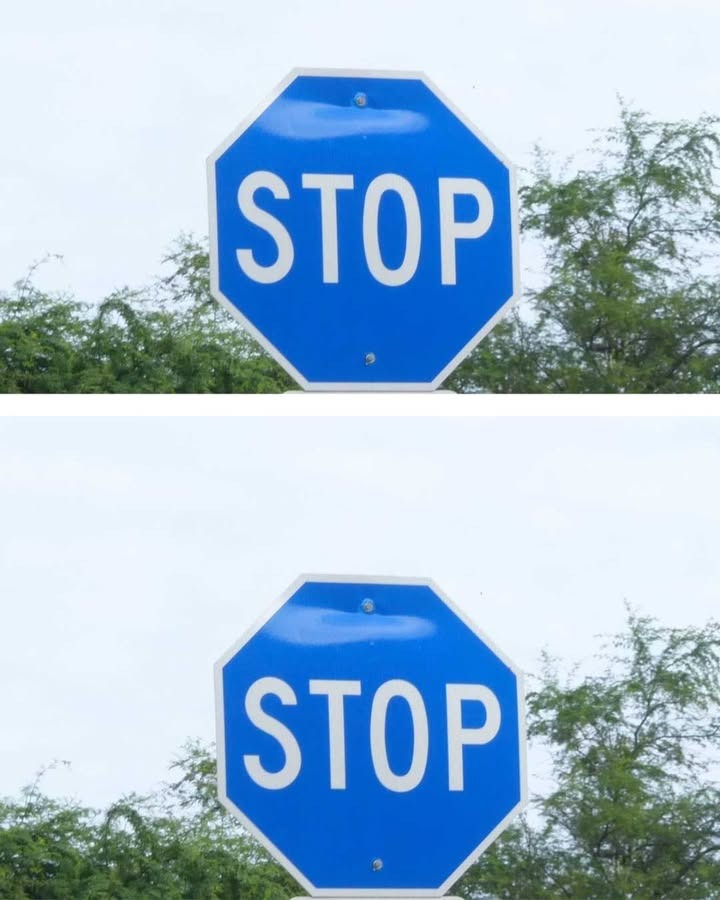
Traffic signs are designed to quickly convey important information to drivers and pedestrians. Most of us are familiar with standard signs—like the red octagonal STOP sign or yellow diamond-shaped warnings. But occasionally, we encounter signs that deviate from the norm, sparking curiosity and questions. One such oddity is the blue stop sign—what does it mean?
The Mystery of the Blue Stop Sign
Seeing a blue stop sign can be confusing because it contradicts the familiar red version universally recognized as meaning “STOP.” After seeing one recently, we asked around—and heard that it might have a different meaning. So, what’s the truth?
Let’s explore what blue stop signs might indicate and why they exist.
Common Reasons for Blue Traffic Signs
1. Informational Use on Public Roads
Blue traffic signs are typically informational. They’re used to provide guidance—like pointing to rest areas, hospitals, or lodging—rather than enforcing traffic rules.
2. Indicating Roadside Services
Blue signs often show the presence of helpful roadside services such as gas stations, food, or parking areas.
3. Directing to Tourist or Recreational Spots
They can also highlight tourist attractions, parks, or scenic routes for visitors.
4. Use on Private Property
A blue stop sign is rare on public roads but might be used on private property—like inside gated communities, amusement parks, college campuses, or industrial sites. Private owners can use non-standard signs to fit specific needs.
5. Designed for Specific Groups
In some cases, blue stop signs might be used as visual cues for certain drivers, such as those with disabilities, where standard color signs might not stand out enough.
6. Decorative or Thematic Design
Blue signs may also be chosen for aesthetic or branding purposes in certain environments, such as theme parks or special events.
7. Experimental or Novelty Signs
Sometimes blue stop signs are simply experimental or decorative, serving no legal traffic purpose but used to get attention or fit a visual theme.
Why Traffic Sign Colors Matter
The color of traffic signs is standardized to make driving predictable and safe.
– Red = Stop, yield, prohibition
– Yellow = Warning
– Blue = Information or guidance
That’s why a blue stop sign can be confusing—it breaks from that expected color system.
Regional Variations in Traffic Signage
